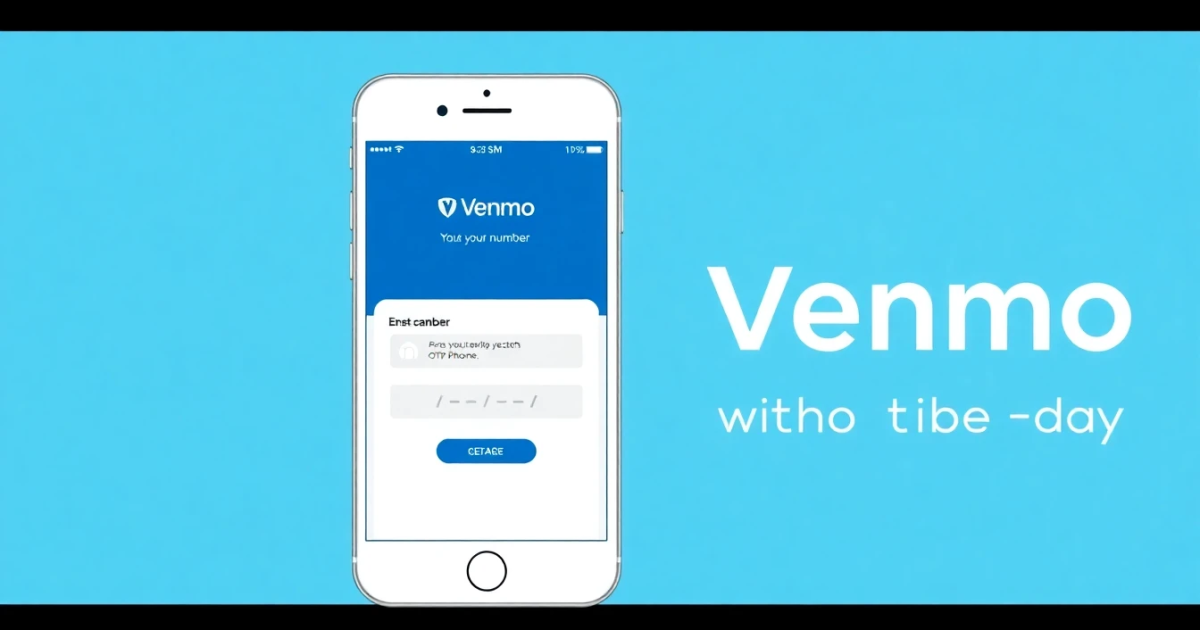
How to Create a Venmo Account Without a Phone Number
You cannot create a fully functional Venmo account without a phone number because Venmo requires SMS verification and mobile number binding for account creation, login authentication, and identity confirmation. If you want to use the platform without sharing your personal cell number, you have to look at alternative verification methods, such as temporary mobile numbers or virtual phone numbers, while understanding Venmo security requirements and platform policies.
Quick Answer
Venmo requires a mobile phone number that can receive SMS text messages or verification calls during sign-up. Personal mobile numbers are the standard requirement, but users seeking privacy often explore virtual SMS verification numbers or alternative digital wallets. Be aware that VoIP numbers or public free numbers frequently fail on financial apps due to strict anti-fraud filters.
- Venmo mandates mobile verification for all new accounts.
- Public free SMS numbers usually fail because financial platforms block VoIP and shared ranges.
- Alternative payment apps may have different verification requirements.
Introduction
Setting up a peer-to-peer payment application like Venmo usually requires a smartphone, a bank account or debit card, and a verified mobile phone number. For privacy-conscious users, sharing a personal phone number with every financial service can raise concerns about spam, data leaks, and unwanted marketing calls. Many people search for ways to bypass this requirement or set up an account using alternative methods.
However, financial platforms enforce strict security controls to prevent fraud, money laundering, and unauthorized account access. Because of these rules, platforms like Venmo make mobile number verification mandatory. Understanding how the verification process works, what options exist for protecting your privacy, and why certain shortcuts fail will help you navigate account setup safely and realistically.
What It Means and How It Works
Venmo is a mobile payment service owned by PayPal that allows users to transfer funds to others using a mobile app or web interface. To secure financial transactions, the platform relies on multi-factor authentication (MFA) and phone verification.
When you sign up for Venmo, the system asks for your legal name, email address, password, and mobile phone number. Venmo then sends an OTP (one-time password) via SMS to verify that you have physical or active control over that phone number. This step links your digital profile to a specific telecommunication route.
Financial institutions and payment apps distinguish between different types of phone numbers:
- Mobile Carrier Numbers: Standard numbers issued by major cellular operators (AT&T, Verizon, T-Mobile, etc.). These are trusted by financial platforms.
- Landline Numbers: Traditional fixed-line numbers. These usually cannot receive SMS messages unless they have a landline text-to-speech feature enabled.
- VoIP (Voice over IP) Numbers: Internet-based numbers provided by digital communication services. Many financial apps flag or block VoIP numbers during registration to prevent automated bot signups and fraud.
Because Venmo checks carrier databases during registration, simply making up a phone number or using a blocked VoIP range will prevent you from completing account creation.
Practical Scenarios
Users look for ways to sign up without their personal phone numbers in several common situations. Recognizing these scenarios helps clarify what is possible and what is restricted.
- Protecting Personal Privacy: You want to send or receive money casually without exposing your primary mobile number to strangers or business contacts on the Venmo social feed.
- Using a Secondary Device: You are setting up an account on a tablet or computer and do not have a dedicated mobile SIM card installed in that device.
- International Travel or Relocation: You are located outside the United States or are using a non-US phone number, but Venmo primarily supports US-based mobile numbers for account holders.
- Avoiding Telemarketing Spam: You want to keep your personal inbox free from promotional texts or data broker harvesting associated with financial app registrations.
- Managing Business Transactions: You run a small side hustle and prefer a dedicated professional contact point rather than your personal cell phone number.
- Temporary Account Needs: You only need to complete a single transaction with a friend or family member and do not want your personal identity permanently tied to a payment profile.
- SIM Card Transitions: You are between mobile carriers or temporarily without active cellular service while transitioning between providers.
Step-by-Step Account Setup Reality
Because Venmo enforces mandatory phone verification, the actual creation process requires a valid number that can accept the initial verification code. Here is how the standard sign-up flow operates, along with where alternative steps fit in.
- Download the App or Visit the Website: Install the official Venmo app on your mobile device or navigate to the web portal.
- Enter Basic Credentials: Provide your email address, create a secure password, and enter your legal first and last name.
- Provide a Mobile Number: Enter a phone number when prompted. The platform will send a verification code via SMS.
- Enter the Verification Code: Input the one-time password received on your phone to confirm ownership. If the number is flagged as a disallowed VoIP range, the system will prompt you for a different number.
- Link Funding Sources: Add a bank account, debit card, or credit card to fund transactions. Note that identity verification (SSN, date of birth, and address) will eventually be required to lift transfer limits, in compliance with federal regulations.
- Configure Privacy Settings: Adjust your transaction visibility settings from public to private if you want to keep your payment history hidden from other users.
- Account Freezing: Venmo's security algorithms frequently review accounts for suspicious activity. If an account is flagged for using a blocked VoIP range or mismatched identity data, it will be frozen.
- Loss of Funds: If your account is frozen or terminated due to policy violations, recovering your funds can become difficult or impossible.
- Identity Verification Requests: Venmo may ask for government-issued photo identification and proof of address at any time, especially when you transfer larger sums or receive money regularly.
- Data Security Risks: Using untrusted, free public SMS inboxes to receive verification codes exposes your financial setup to anyone else watching that public inbox. Never use a public free number for any account that holds money.
Safety, Privacy, and Legal Considerations
Attempting to bypass financial verification controls or using fake identity information violates Venmo's User Agreement. Understanding the security and legal framework protects you from unexpected account closures or frozen funds.
Venmo operates under US banking regulations enforced by federal authorities, including anti-money laundering (AML) laws and Know Your Customer (KYC) rules. This means that while you might want privacy from other users, the platform itself must collect verifiable identity data.
If you use unverified information, temporary burner numbers that get recycled, or fake credentials:
Best Alternatives and Verification Solutions
If your primary goal is avoiding the exposure of your personal cell phone number while still maintaining a legitimate, functional account, you must use reliable communication infrastructure that financial platforms accept.
Free public SMS websites are unsuitable for financial services because the numbers are shared, public, and frequently blacklisted. Instead, users who need private verification often look to dedicated telecommunication services.
For users who need a paid private option instead of a public inbox, PVACodes can be considered as one SMS verification solution, depending on the country, app, and current availability. Dedicated virtual numbers or rental numbers provide a private inbox accessible only to you, reducing the risk of unauthorized account recovery that occurs when using public, shared phone numbers.
If Venmo's strict mobile verification proves incompatible with your privacy requirements, consider alternative financial tools or traditional bank transfers that do not rely on social payment apps.
Frequently Asked Questions
Can I use Venmo without a phone number?
No. Venmo requires a valid mobile phone number during sign-up to send an SMS verification code and secure your account against unauthorized access.
Does Venmo accept VoIP numbers?
Venmo’s fraud prevention systems frequently block VoIP numbers, virtual numbers from free apps, and internet-based calling services during registration.
Why did my verification code fail to arrive?
Verification codes can fail due to carrier filtering, poor signal strength, entering the wrong country code, or because the phone number type is unsupported by the platform.
Can I use a landline number for Venmo?
Standard landlines cannot receive SMS text messages unless they have specialized text-to-speech features enabled, which most financial verification systems do not support.
Is it legal to use a virtual number for verification?
Using a virtual number is not inherently illegal, but violating a platform's terms of service by providing false information or using prohibited numbers can result in account termination and frozen funds.
What happens if my Venmo account gets frozen?
If your account is frozen, you will typically need to contact Venmo support and provide official documentation, such as a government ID and proof of ownership for your funding sources and phone number.
How can I keep my phone number private on Venmo?
While you must provide a number to create the account, you can adjust your privacy settings so that other users cannot search for you using your phone number.
Can I use Venmo outside the United States?
Venmo is primarily designed for users living in the US who have a US mobile number, a US bank account, and a US residential address.
Are free online SMS numbers safe for Venmo?
No. Free online SMS numbers are public, meaning anyone can view the messages. Using them for financial apps allows strangers to access your verification codes and compromise your money.
What are the alternatives if I cannot verify my phone?
If you cannot meet Venmo's verification requirements, you can use traditional bank wires, PayPal (which has its own verification rules), Zelle through your bank's app, or cash transactions.
Conclusion
Creating a Venmo account without a phone number is not possible due to mandatory security and anti-fraud protocols. While the desire to protect personal privacy from spam and public exposure is understandable, financial platforms must verify user identity and device ownership.
To succeed, use a supported mobile number, configure your in-app privacy settings to hide your contact details from other users, and avoid unreliable public services that put your funds at risk. If strict phone verification does not align with your privacy goals, rely on traditional banking alternatives instead.
Need a number for Venmo? Get a non-VoIP number that receives the code on the first try.
Get a Venmo number